Loading ...
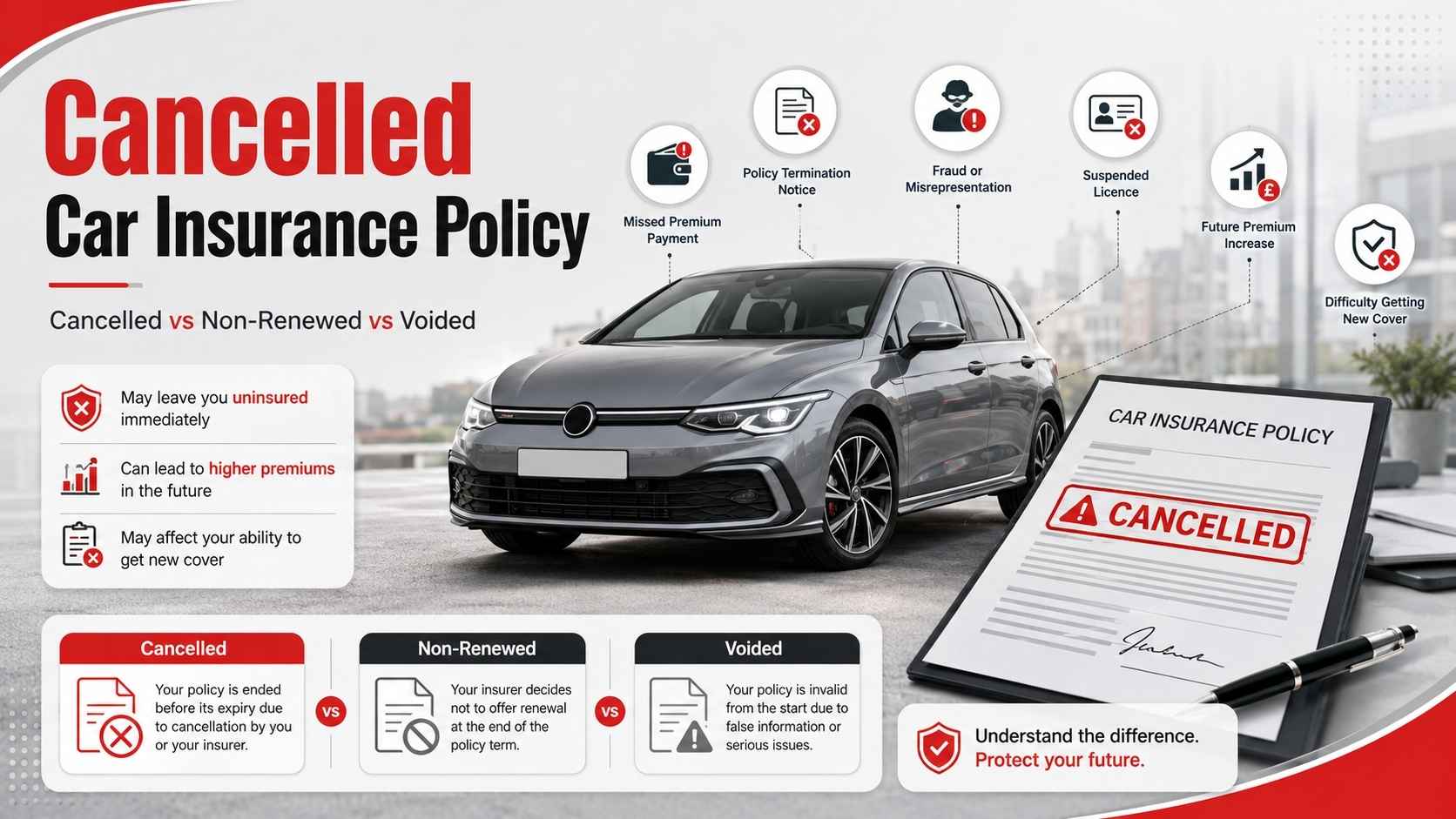
Cancelled Car Insurance Policy: How is It Different from Non-Renewed and Voided?
Cancelled Car Insurance Policy: How is It Different from Non-Renewed and Voided?
A cancelled car insurance policy is a policy that has been terminated by the insurance company before its expiration date. There are several reasons why an insurance company is able to choose to cancel a policy, including non-payment of premium, fraud, or a significant change in the risk profile of the insured. Coverage terminates immediately or on a predetermined date when an auto insurance policy is cancelled. Furthermore, the policyholder is not eligible for a return of any unearned payment if the car insurance is cancelled. It is crucial to realise that having a cancelled vehicle insurance policy on record severely influences the capacity to receive coverage from other insurance companies in the future.
The most frequent cause of the cancellation is failure to pay premiums. The insurance provider is able to cancel the coverage if the policyholder fails to make timely premium payments. Fraud cancels the coverage if a policyholder gives incorrect information on an auto insurance application or files a fraudulent claim. Additionally, the insurance provider cancels the coverage if the policyholder's driving licence is suspended or revoked. Keep in mind that cancelling the car insurance policy does have severe repercussions, such as leaving the policyholder uninsured or making it more difficult and costly to obtain coverage in the future from other insurance companies. It is essential to thoroughly explore the options before deciding to terminate the car insurance policy.
What is a Cancelled Car Insurance Policy?
A cancelled car insurance policy refers to one that has been terminated prior to its expiration date. It is either by the insurer or the policyholder. It occurs due to lack of payment, falsification of information on the application, the policyholder getting a new insurance policy, the policyholder selling the insured vehicle, or the car being declared a total loss. Traditionally, once an insurance policy is cancelled, the insurance company is obligated by state rules to send a notification to the policyholder. The policyholder is entitled to a premium reimbursement for the unused portion of the policy, depending on the cause for cancellation.
How Does Cancelled Car Insurance Differ from Non-renewed Car Insurance?
Cancelled car insurance and non-renewed car insurance both refer to situations where automobile insurance coverage does not continue beyond its expiration date. Nevertheless, there are significant distinctions between the two terms. Cancelled car insurance is either the insurance company or the policyholder who cancels an automobile insurance coverage prior to the policy's expiration date. It occurs due to non-payment of premiums, falsification of information on the application, or the policyholder purchasing a new insurance policy. On the other hand, a non-renewed car insurance policy is one that is not being continued by the insurance company beyond its expiration date. A non-renewed car insurance policy happens when the insurance company decides not to renew a policy owing to the policyholder's driving record or other factors such as a change in the policyholder's personal circumstances. The two situations have trouble acquiring coverage in the future, and it is subject to fines for driving without insurance.
How Does Cancelled Car Insurance Differ from Voided Car Insurance?
A car insurance policy is cancelled by the insurance company or the policyholder before the policy's expiration. It occurs due to non-payment of premiums, manipulation of information on the application, or the purchase of a new insurance policy by the policyholder. A cancelled auto insurance policy is one that is invalid from the beginning as if it never existed. The insurance company terminates the policy retroactively, rejecting coverage for any claims that occurred within the policy period. The policyholder has difficulty obtaining coverage in the future and is going to be fined for driving without insurance. In contrast, a cancelled policy is typically viewed as a more serious situation, as it suggests that the policyholder was driving without insurance.
What are the Main Reasons Why Car Insurance Cancels Car Insurance?
Listed below are the main reasons why car insurance cancels car insurance.
- Non-payment of premiums: The insurance company cancels the policy if the policyholder fails to make payments on time.
- Fraud or misrepresentation: The policy is cancelled if the policyholder provides false or misleading information on the insurance application.
- Violation of policy terms: The policy is cancelled if the policyholder violates the terms and conditions of the policy, such as driving under the influence of drugs or alcohol.
- Change in circumstances: The insurance company cancels the policy if the policyholder's personal circumstances change, such as a change in address or employment.
- Accumulation of traffic violations or accidents: The insurance company cancels the policy if the policyholder accumulates too many traffic violations or is involved in multiple accidents.
- Purchase of a new policy: The previous policy is cancelled if the policyholder acquires a new insurance policy.
- Insurance company's decision: The insurance company simply decided not to renew the policy when it expires in most cases.
How Does Cancelled Car Insurance Affect the Future of Your Car Insurances?
Cancellation of a car insurance policy has major repercussions for future coverage. Insurance companies view a cancelled policy as a red flag that makes obtaining coverage in the future difficult. A policyholder is charged higher premiums if the policyholder is able to obtain coverage due to previous cancellations. It is because insurance companies perceive them as customers with a greater risk. Furthermore, a negative effect on the credit score if the policy was cancelled for non-payment of premiums. A lower credit score makes it more difficult to obtain coverage and results in higher premiums in the future. Lenders see it as a higher-risk customer and make it more difficult to secure financing if it requires auto financing and has a cancelled policy on record. Compelled to drive without insurance if individual is unable to obtain coverage. However, it is unlawful in the majority of states and results in fines, legal issues, and increased costs in the event of an accident. It is essential to avoid having the car insurance policy cancelled to avoid these bad outcomes. Additionally, maintain a clean driving and insurance record.
What Do I Need to Do After My Car Insurance is Cancelled?
It is a must to take various procedures if the auto insurance coverage has been cancelled. The first step is to determine the reason for the cancellation, which is stated in the insurance company's cancellation notice. Contact the insurance carrier in an effort to rectify the situation if the cancellation was done in error. Acquire new insurance coverage immediately if the cancellation is permanent. Always browse and compare quotes from several insurance providers to acquire the finest coverage at a reasonable price. Review the insurance coverage to ensure that it has the appropriate coverage for the needs. Ensure that it has sufficient insurance coverage to meet the state's minimum liability standards. Pay the premiums on time and establish a positive payment history with the insurance company to avoid future cancellations. Prevent auto insurance policy from being cancelled in the future and guarantee that it has the necessary coverage to safeguard someone on the road. Cancelled insurance stays on record until 5 years.